
Description
In the West, interest in Buddhism has come through the Theravada, Tibetan and Zen traditions, However, the fact is that to an uncommitted observer, these forms of Buddhism seem to have little in common with one another beyond the general Buddhist teaching of a way out of suffering. This is because their common supporting body, the original Indian Buddhism of the Buddha’s homeland of Northern India together with its direct successor, Indian Mahayana, have not survived as independent living traditions.
without some knowledge of the ideas and principles which animated this parent system, it is little wonder that the widely dispersed later generations of teaching are not easy to connect. Indian Mahayana was the greatest flowering of Indian Buddhism, and it became the long-lasting inspiration of China and all the Far East. It is not beyond the bounds of possibility that, once known, this deep and wide-ranging Buddhist scheme of things can inspire and revitalize even the jaded sensibilities of today.
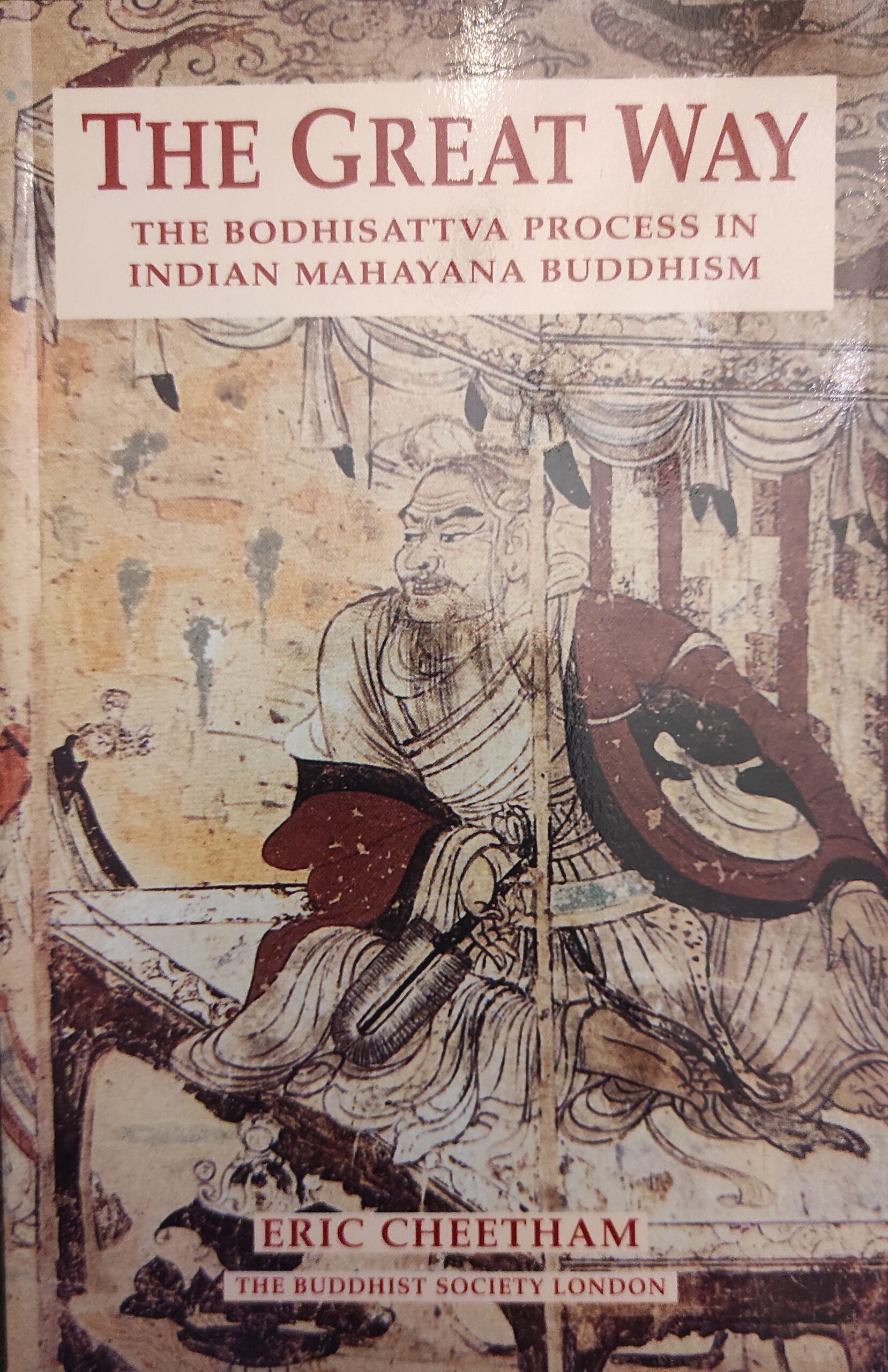
The Great Way: The Bodhisattva Process in Indian Mahayana Buddhism – Eric Cheetham, The Buddhist Society, London, 2006.


